Fairy Tale Retellings: What Works in 2025
11/20/25
Fairy tales have a way of sticking with us, don’t they? We grow up with them, sometimes loving them, sometimes rolling our eyes at them, but even then, we still remember every poisoned apple and every glass slipper. And that’s why fairy tale retellings keep showing up in fantasy. They give readers the joy of something familiar while still surprising them with something new.
If you’re thinking about writing one yourself, you might be wondering: what actually makes these stories work in 2025? Let’s dig in.
Read Also: From Cursed Idea to Crown Jewel: A Fantasy Writer’s Journey
Why We Keep Returning to Fairy Tales (and Why They Still Matter)
Fairy tales stick because they tap into something universal. At their heart, these stories are about love, betrayal, sacrifice, and longing, things we all still wrestle with today. The glass slipper, the poisoned apple, the spinning wheel, they’re symbols that never really leave our collective imagination.
For a new writer, this is actually good news. You’re working with raw material that already carries meaning for your reader. That’s powerful. It means you don’t have to build everything from scratch; you just have to decide what you want to say with it.
What Makes Fairy Tale Retellings Work in 2025: 3 Key Ingredients
2025 feels like the perfect moment for fairy tale retellings, and that is because readers are craving stories that mix nostalgia with something new, which is why these kinds of retellings fit so well right now. Here’s what you need to make them work.
1. Fresh Perspectives — New Angles on Classic Tales
Readers today want twists that surprise them. They don’t just want the princess locked in the tower; they want to know what the witch thinks or what happens if the tower itself becomes a character. A great example of this is Blood Magic, a retelling that fuses elements of Rapunzel and Sleeping Beauty into something completely fresh. By weaving the two stories together, it gives us new angles on characters we thought we already knew.
2. Depth and Complexity — Building Layers Beneath the Magic
Readers these days aren’t satisfied with a neat little “happily ever after.” They want characters who feel real, messy, flawed, and layered. Your hero doesn’t have to have it all figured out. In fact, readers love seeing them wrestle with doubts. The same goes for your villains; give them heartbreak or scars behind their choices, and suddenly, they’re more than just “the bad guy.” Even relationships don’t have to be clean-cut; in fact, the gray areas are often the most compelling.
When you bring this kind of depth into your retelling, it stops being just another remix of the old tale. It becomes something that mirrors real human experience. And that’s exactly what keeps readers hooked: they see their own struggles, fears, and emotions reflected in your characters’ journeys.
3. Modern Relevance — Fairy Tales That Reflect Today’s World
Fairy tales really land when they feel like they’re speaking to the world we’re living in right now. Readers don’t just want castles, curses, and happily-ever-afters; they want stories that touch on real struggles they can recognize. Maybe that looks like exploring what isolation feels like in a world that’s supposedly more connected than ever. Or maybe it’s digging into power dynamics that echo the inequalities we see every day. It could even be about the fight for freedom in a society that feels full of limits.
When you weave those kinds of themes into your retelling, you get the best of both worlds. The magic and wonder are still there, but now they come with questions that feel urgent and relatable. And that’s what makes a retelling not just enjoyable, but memorable.
Read Also: Cozy Fantasy vs. Epic Fantasy: Where Does Your Book Fit?
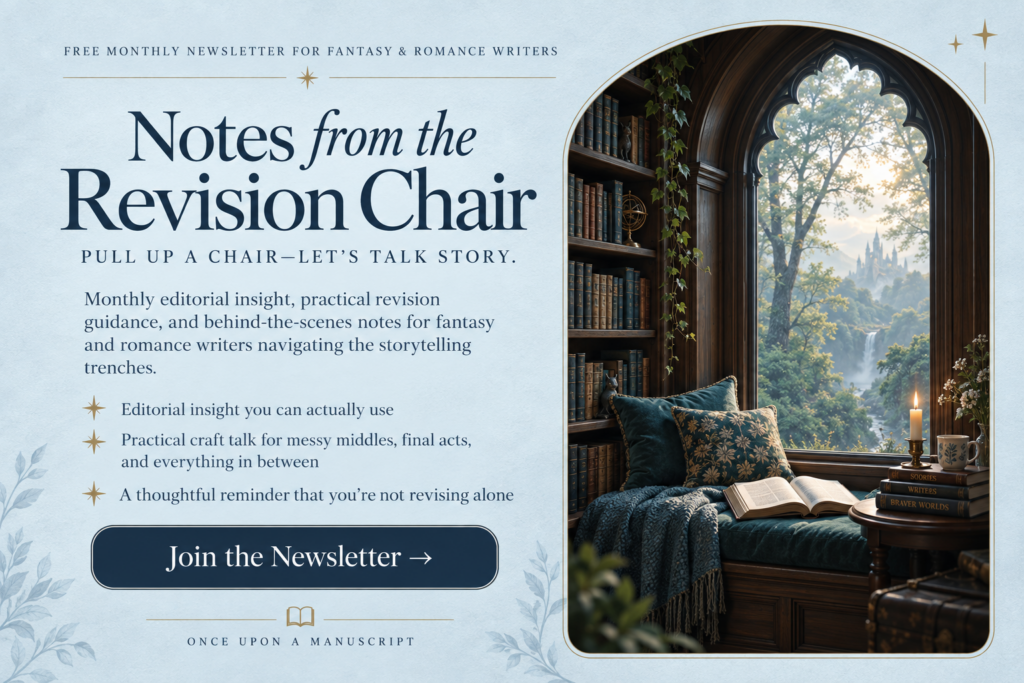
If you want more craft conversations about taking a familiar story and making it feel unmistakably yours, pull up a chair.
Notes from the Revision Chair is my monthly newsletter for fantasy and romance writers, with practical revision guidance, editorial insight, and thoughtful conversations about retellings, character, worldbuilding, theme, and the choices that help a story become more than a costume change.
Join Notes from the Revision Chair ↓
Case Study: What Cinder Teaches Us About Successful Retellings
Let’s take Cinder by Marissa Meyer, which is a great example of how retelling can work when it has its own heartbeat. On the surface, it’s still Cinderella: the stepmother, the prince, the girl who feels trapped. But instead of glass slippers, we get a futuristic world where Cinderella is a cyborg mechanic. The fairy tale is there, but it isn’t stuck in the old version.
That’s why it works. It doesn’t just copy the classic; it grows past it. Readers welcome the comfort of something familiar, but with higher stakes, richer themes, and a world that feels fresh. And that’s the magic of retellings: they reimagine the story instead of just repeating it.
Is My Retelling Unique Enough? How to Find Your Voice in a Familiar Story
It’s completely okay if you’re still unsure. Writing a retelling can feel intimidating, and it’s natural to wonder if you have something new to add. But here’s the thing, you absolutely do. If you feel drawn to retell a fairy tale, that’s a sign there’s something only you can uncover in it. Every author brings their own kind of magic to an old tale. Book a Mini Manuscript Critique today, and let’s polish your retelling into a story that shines brighter than glass.